17 December 2009

Egypt Swine Flu Deaths at 64


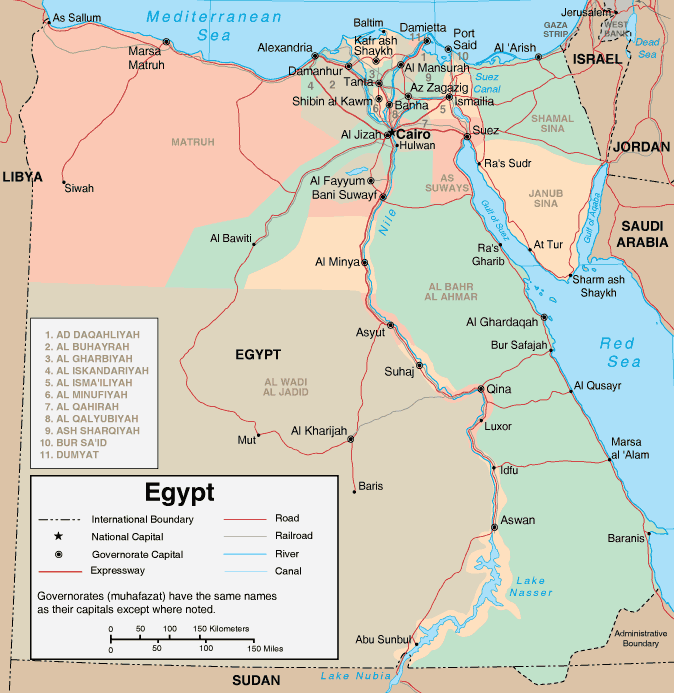
CAIRO: Egyptian Ministry reports three more deaths on December 16th, caused by the swine flu. The total number of deaths is now 64. The people reported dead were: a 26-year old woman, a 2-year old boy, and a 14-year old student. 

Officials are expecting dead numbers to rise to 100 by the end of this year due to the winter season. Death rate might decrease in March 2010 as the weather warms up. 

Source: 

(Reliability: 9)


15 December 2009

Egypt Swine Flu Deaths Rise to 59


CAIRO: Egypt's Health Ministry reported on December 14th three more deaths from the swine flu, rising total number of deaths for Egypt to 59. Officials dread winter months will make people more vulnerable thus increasing the number of swine flu cases and deaths. 

The first death case reported was a man who was 47 years old from Beheira, Egypt. This man additionally suffered from dyspnea and cirrhosis.
The second case includes a 48-year-old woman from Beni Suef; she also suffered from dyspnea, but pneumonia as well.The third case was a pregnant 27-year-old woman from Minya. No previous health problems nor complications were reported. 

The Undersecretary of Ministry of Health for Preventative Affaris, Amr Kandil, argues the virus was not mutated, and the increase in cases does not indicate mutation alteration. Awad Mahgour, Director of Communicable Diseases at the World Health Organization, disagrees and suggests the virus has been mutated but is in a "restricted context." 

WHO research fails to prove the anti-viral drug Tamiflu prevents problems from the swine flu. However, they still recommend the use of Tamiflu to those who are already infected but not to those that are healthy. 

Sources: 


(Reliability: 9)

13 December 2009

Cairo Going Green


Since the pigs were slaughtered, civilians in Egypt have been looking for other alternatives. Few families started to recycle waste. Moreover, Thomas Culhane, presented the idea of turning organic waste into alternative energy in Garbage City, in east Cairo's Manshiet Nasser slums. He runs Solar Cities to develop and design technologies to solve local problems. His funds to install solar panels to produce hot water for families in Garbage City come from a grant from the US Agency for International Devolpment. Gargabe City is place where thousands of trash collectors reside, also known as zabaleen, who are Coptic Christians. Culhane's idea was accepted and spread to Muslim areas of Darb al-Ahmar, promoting Culhane and Hanna Fathy, who is a Manshiet Nasser resident involved as well. 

Source:

(Reliability: 6)

Comment: Due to the increase in garbage waste in the streets, Cairo did need an alternative to dispose organic waste since the pigs were terminated. Thomas Culhane's idea presents a possible solution to this problem. This will decrease favorable conditions to many diseases, including the swine flu.

08 December 2009

Egypt's Death Toll: 32

CAIRO: Egyptian Health Ministry reported the 32th death caused by swine flu on Monday, December 7th . Further details on the person's health condition and situation were not provided by the ministry. MENA news agency states the victim is a 29-year-old woman from the northern Gharbiya governorate 50 miles north of Cairo. 
However, Abdel Rahman Shahine, ministry spokesman, reported the woman suffered from severe respiratory symptoms and had a history of cancer. She received chemotherapy and radiation treatments after having a hysterectomy. 


Source:

(Reliability: 7)

02 December 2009

Egypt's Health Ministry reports swine flu 22nd death


CAIRO: Abdel Rahman Shahin, Ministry of Health spokesperson, reported the death of a 53-year-old man from Helwan named Ali Mohamed Rashad, making the total number of deaths 22. The victim was hospitalized on Wednesday November 25th in the private hospital called Al Salam International Hospital. He was in a critical condition suffering from severe respiratory problems and had difficulty breathing, and was later put in the Intensive Care Unit (ICU) on a ventilator. Medical history reports indicate he also suffered from renal failure. 
Even though the hospitals admits people infected by the swine flu, it does not have the tools to test for H1N1. Therefore, Ali's test was sent to a Central Laboratory that is an affiliate of the Ministry of Health on the same day he was hospitalized. The test resulted positive. 
During the Eid El-Adha holiday weekend, eight more deaths were reported. 


(Reliability: 8)

Comment: World Health Organization (WHO) has reported 7,820 deaths across 207 countries. 

25 November 2009

Swine Flue Fears for Hajj PILGRIMS


CAIRO- Vaccinations for meningitis, seasonal flu, yellow fever, and for the H1N1 are being distributed before civilians leave their country to the hajj. Before the vaccination is applied, a complete check-up on the individual is required to make sure the person is healthy. The process includes the following: a complete physical, including blood tests, chest x-rays and electrocardiograms. Other countries mandating the vaccine are China, Turkey, Bahrain, the United Arab Emirates, Jordan and more. 


Reliability: 6

Comment: Three million people from 160 countries will gather for the worship. While Muslims view it as a spiritual experience, this gathering welcomes an opportunity of major outbreaks and further global spread and civilians return home. 


23 November 2009

Egypt Reports 10th Swine Flu Death


CAIRO: Egypt's tenth death was reported on November 22 caused by the swine flu. The victim was a 48-year-old woman who was hospitalized Saturday night, and died the next day. Ministry officials report the woman was suffering from a high fever, asthma, and diabetes. However, the death was caused by the the worsening of these symptoms and condition by the swine flu. 

Nine out of the ten  cases have been women and health authorities are concerned. Till this day, approximately 3,000 cases have been reported caused by the swine flu. At least six schools have closed due to major outbreak concerns. 

H1N1, swine flu, vaccinations are still in the process of distribution among pilgrims participating in the annual Hajj at the end of November. Sanitary precautions are highly recommend since three million people are prone to infection. Major distress is the spread among people back in their local communities. Restrictions were officially imposed to prohibit the attendance of children and elderly in the annual pilgrims to decrease the possibilities of fatal outcomes. 


Reliability: 8 

16 November 2009

Egypt: Seventh Death Reported


DUBAI- Egypt's seventh fatality caused by the swine flu was reported. The victim was a 37- year old woman. Newspaper reported she was in the hospital on November 11th due to pneumonia and died to chronic obstructive pulmonary disease. 


(Reliability: 8)

Comment: As of November 14th, the total number of cases raise to 2,607. 

11 November 2009

Egypt: Student's Struggle for Education


As the Ministry of Health continues to close private and public schools all throughout Egypt due to the augmentation in the number of swine flu cases, thousands of parents' concerns for their children's education increase. Parents look for alternates for education, but fail to find a solution. Private lessons are expensive and private schools are being forced to close also. Parents worry that their children might not even be able to take their end-of-semester exams on January as planned. 
The Ministry of Health announced 466 confirmed cases among the student population. Therefore, the Ministry of Education has closed at least 22 schools and quarantined students inside their classrooms of those schools that still open.  The increment  in number of cases along with pneumonia, will lead the Ministry of Education to close all schools across the nation. 


(Reliability: 8)

Comment: Approximately, 1,746 people have recovered from the H1N1, others are continue to be treated. 

09 November 2009

Cairo University Satellite Imagery

Image 1.
Image 2.
Image 3.

Image Description

The photographs of Cairo University of Egypt provided were extracted from satellite imagery by Google Earth. The primary image (attached) is at an eye altitude of 785 meters, the secondary at 467 meters, and the third at 253 meters.  The primary image exhibits the main highways that surround the university. The main university building has a half spherical structure above the building. The building sits on a large tract of rectangular land in which several smaller complexes surround it with a major concentration in the west side. There is a large rectangular visible area and a circular area north and east from the main building respectively where vegetation is visible. There is also a three-dimensional building east from the university. 


Intelligence Usefulness

Image is useful for strategic and operational intelligence. For strategic planning, the images may be somewhat unstable. The trees north and east from the main university building could be cut off and other buildings may be constructed in those areas. However the rest of the buildings, highways and roads are stable. Further construction of main buildings and roads to facilitate access to the university will be fairly visible through this type of imagery. 

Operationally, when attacking the university aerially, the university is vulnerable, and thousands of students, faculty and staff will undoubtedly be at risk. However, ground approach can only be made through various checkpoint areas. Parking lot is readily scattered and a short distance from the main building and the rest of the university buildings. However, parking permits are advised to better monitor the area (if applicable). Damage to those buildings through an explosion can be predicted. Biological or chemical agent attacks would be possible as well. 


Shortcomings

An image is limited to provide all information due to the limited view it provides, and therefore has a little tactical value.  These images only provide an external top view of a particular area of the earth's surface.  We can see buildings, their surroundings, vegetation, main roads, bodies of water, etc. In addition, we can see the size of the building as well as few entrances, but we are not able to see security nor precisely nor functions and activities taking place in the university. All possible threats that can occur externally or internally can not be predicted through these images. Therefore, other sources will be required to know more about these unobservable actions. 


Summary

Cairo University is an institute of higher education; it includes law school, and medical school. This school is one of the most important and biggest university in Egypt where a disaster would result as a disastrous tragedy. Currently, it is one of the most active universities in combating the swine flu. The large area the university covers that is observed in the images, demonstrates potential capacity of the large number of students and faculty. Students are in constant contact with each other and papers and books are frequently passed from individual to individual, which puts them a higher risk in acquiring the swine flu. However, this internal threat cannot be observed nor predicted through satellite imagery. Cairo University is vulnerable to internal and external threats. 

08 November 2009

Israel Transfers 5,000 H1N1 Vaccinations to Gaza


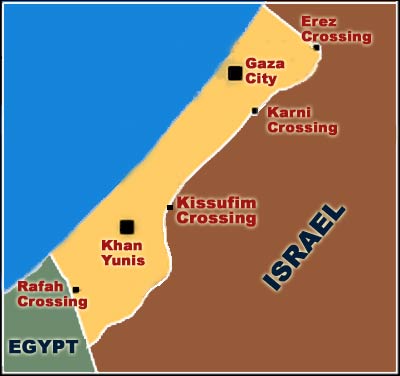
TEL AVIV- Israel transferred 5,000 H1N1 vaccinations to Gaza for Hajj pilgrims leaving to Saudi Arabia through the Rafah border crossing with Egypt. Additional 20,000 swine flu vaccinations were allowed into Ramallah in the West bank by Israel. A total of 300,000 vaccinations were received by Israel for the H1N1 flu and people at a higher risk are already being vaccinated.


(Reliability: 7)

Comment: Gaza is a large Palestinian city located in Gaza Strip city. This crossing had been closed since 2007 by Israel and Egypt. Vaccinations received by pilgrims crossing through the Egypt's crossing in Rafah may decrease the probability of spread of the swine flu in Egypt and Saudi Arabia.

03 November 2009

Egypt Reports 6th Death Caused by Swine Flu


CAIRO: Number of deaths from the infection of the H1N1 virus swine flu climbs up to 6. Five of those deaths have been women. The 6th victim was 23 years old woman from Giza who was diagnosed with the virus on October 28, and passed away in the hostipal Monday morning, November 2. The previous day, the death of a 9 year old boy from the same cause in Helwan, south of Cairo. On October 30th, an Egyptian woman was reported dead in Ismailia.
The first death in Egypt was announced in June, now the total nuber of Swine Flu cases are more than 1,000.
As the sixth death was reported, the ministry reported the arrival of 70,000 vaccines. These vaccines will be distributed to pilgrims attending the hajj to Mecca, Saudi Arabia at the end of November.
Officials are hoping the vaccines will prevent further spread, yet fear pilgrims will contract the virus and spread throught out their home country.


(Reliability: 10)

01 November 2009

Swine Flu Increases Private Tuition in Egypt

Eighteen universities have reinforced hygeine in efforts to prevent swine flu infection spread. The continious increase in swine flu cases have augmented fear in parents for their school children and have been sending them to private tuiton classes. The Information and Decision-Supporting Centre, a government agency, has stated that attendance rates at schools and universities exceed 90%. However, professors at public universities, state otherwise, attendance is dramatically decreasing. Universities have rescheduled lecture timetables to depress class size.
Private lessons are not allowed by Egyptian law, but Egyptian parents are still sending their children to private teaching centres to decrease the probability of becoming diseased from attending the high density classes. The costs have escalated to LE16 billion (US $3 billion), and may continue was the nunber swine flu cases progress.


Source: http://www.universityworldnews.com/article.php?story=20091031122041912

(Reliability: 8)


29 October 2009

Saudi Attempts to Diminish Swine Flu Spread Before Hajj


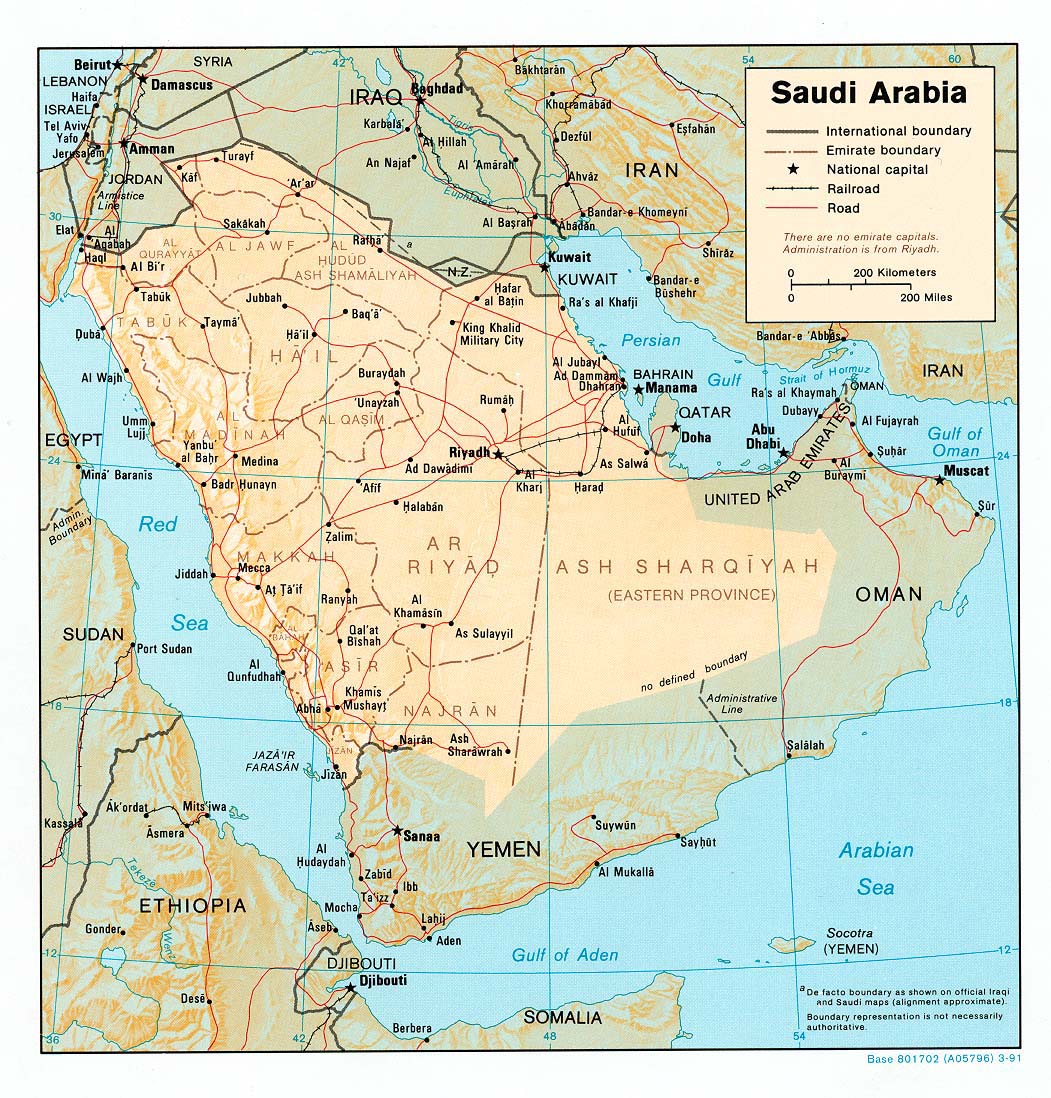
The annual pilgrimage, the hajj, to Mecca is the largest gathering of the planet, bringing 2.5 million people from 160 countries. Such gathering is welcoming for an outbreak since the pilgrims are compacted in the small city of Saudi Arabia for five days. Their holy city could turn into a "petri dish for viral mutations," thus spreading a new pandemic around the world. Saudi authorities have already asked pregnant women, elderly, and diseased not to attend the hajj.
Dr. Ziad A. Memish, Islam's assistant deputy minister for preventive medicine, stated that they will allow all those who enter the country but are recommending the rest of the countries whom should be allowed.
Health authorities recommended pilgrims to frequently wash their hands, bring their own surgical masks and hand sanitizers. In addition, Saudi government has stocked Tamiflu, staffed 76 health facilities, expanded intensive-care units, and will not charge pilgrims for expenses on health problems they may have during the visit.
Though it may be impossible to prevent the flu from spreading among pilgrims, authorities are doing what they can to lessen the probability by keeping the vulnerable from attending the hajj.


(Reliability: 9)

Comment: Previous outbreaks include the meningitis in Mecca in 1987. Muslim pilgrims spread polio from northern Nigeria across Africa to Saudi Arabia and from there to Yemen and Indonesia in 2004. Catholics gathered in July 2008 from all over the world for World Youth Day, broke an Tamiflu
resistant strain of seasonal flu outbreak to the Northern Hemisphere and the United States last winter.

22 October 2009

Risk of Swine Flu in Cairo's schools


CAIRO- Egyptian ministries of health and education have reduced half of the children in classrooms to lessen the spread of swine flu.  Students are obligated to attend school only three days of the week instead of the regular six days. 
For example, Toga Ali, a 13 year old student at Abdullah Ibn Rawaha School in the Imbata area of Cairo, attends on the second shift which consists of Sunday, Tuesday, and Thursday. Her classroom was reduced to 25 students from 80, many which stay home in fear of getting infected. Children wear surgical masks during playtime and classrooms are more ventilated by having the windows open and fans. 

The United Nations Children's Fund (UNICEF) and the Health Ministry are rising awareness through a campaign and TV advertisements.  They are also distributing awareness kits to all schools in Egypt.


(Reliability:9)

WHO School Guidelines


CAIRO- The
World Health Organization (WHO) states that schools may serve as a contributor to the spread of the swine flu. WHO recommends "hand hygiene, respiratory etiquette, proper cleaning, good ventilation, isolation of staff or students" to reduce infection. However, specific recommendation for closure of schools cannot not be made due to the complexity of the situation. Yet, timing of schools' closure are critical. The greatest benefits will be obtained if schools are closed early before one percent of the population are diseased.
Rana Zaqout, head of the Pandemic Influenza Contigency (PIC) unit for the Middle East and North Africa, states that there are many discrepancies about closing schools to prevent an outbreak because taking such action may impact Egypt socially and economically. Closure of schools may reduce the spread, but policies should limit congregation of students outside schools.
Education Minister Youssri el-Gamal says they might not close schools for the winter season


(Reliability: 9)

Comment: Pandemic Influenza Contigency (PIC) unit for the Middle East and North Africa is part of the UN Office for the Coordination of Humanitarian Affairs (OCHOA).

21 October 2009

Egypt will Vaccinate Hajj Pilgrims


CAIRO- Health Minister Hatem al-Gabali reported Egypt plans to vaccinate citizens that will be attending the hajj pilgrimage to Mecca in Saudi Arabia. The vaccination for H1N1 will be available on October 23, 2009. Gabali declares pilgrims will be "vaccinated according to instructions and conditions of the Saudi health ministry." Three million people are expected at the annual hajjto Mecca in late November, therefore, Saudi Arabia required attendant to be vaccinated against H1N1 and H1N5.


(Reliability:8)

16 October 2009

Decrease in Cairo Garbage Collection


CAIRO- Trash piles in the streets of Cairo have been augmenting and civilians’ concerns as well. The Egyptian government decided to slaughter all pigs residing in the country last month to combat H1N1 virus, even though the World Health Organization opposed this decision. The “zabaleen” would collect the organic waste, which was fed to their pigs. Having no more pigs is resulting in a more crowded, noisy, and smellier Cairo where more diseases are likely to develop.
Dana Moussa created an event on Facebook called “Clean up Giza” in which 350 members joined to collect trash from neighborhoods. Giza is the huge section of greater Cairo extending out to the pyramids.


(Reliability: 8)

15 October 2009

First Egyptian School Closure


CAIRO- The College of the Mother of God, a Christian school in Cairo, will close for two weeks after health and education ministries reported finding three people with the swine flu on campus. Egypt announced its closure on October 13, 2009. This is the first school they close in its entire due to the infection from H1N1 virus.


Comment: Egypt postponed first day of schools and universities for Egyptian schools from mid-September till October 3 to prevent outbreaks. However, the number of cases in the country increases to 1,053 swine flue infections, including three deaths.

12 October 2009

Cairo Schools Close in Egypt


CAIRO- Egypt decided to close down two universities and two schools in Cairo, and lessons were out on televisions to help students continue with their education. Health Ministry reported that Ain Shams University closed two Cairo boys and girls school suburbs, as well as language and arts faculties for two weeks. In American University in Cairo closed a classroom after a student was tested positive for H1N1. The school population is 17 million and from those, 1,000 reported to have swine flu since the first report in June 2009.
The Health Ministry stated that Egypt will obtain 5 million doses of swine flu vaccinations over the next six months. About 80,000 vaccines will be delivered by the end of October, 1.2 million by January, and the rest by March. This amount will cover about 6% of Egypt’s 80 million populations, however development for more vaccines are currently at work.


(Reliability: 7)